
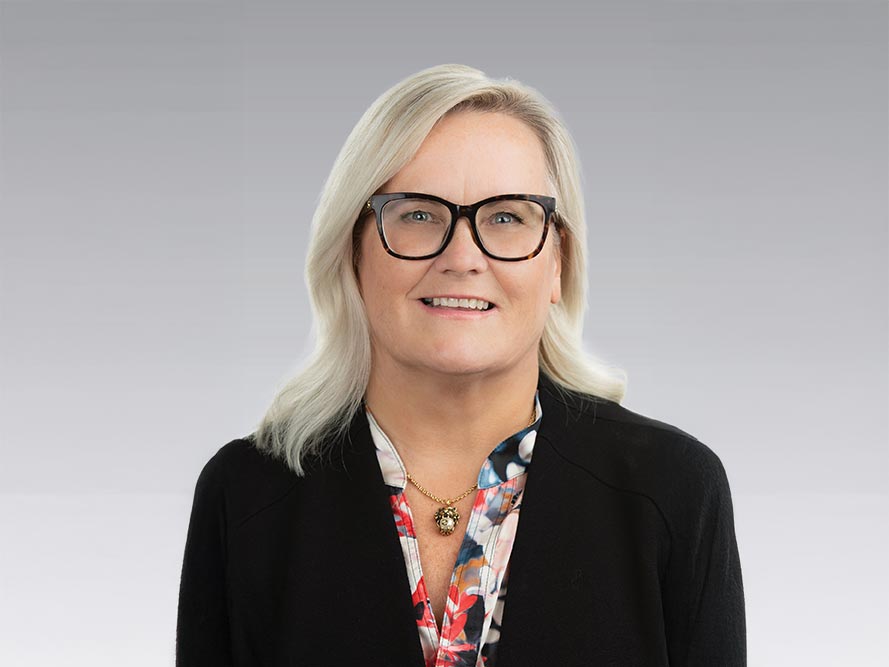
Leadership grounded in Aotearoa values
As part of our Member Interview Series, Global Women member and author Jenni Prisk sat down with Su Duffey, Chief Operating Officer at Super Retail Group in Queensland, Australia. Su is a seasoned executive with extensive experience across banking, telecommunications, and retail in both New Zealand and Australia, and brings a distinctly Kiwi perspective to her leadership. In this conversation, she reflects on how her upbringing in Ōtautahi and Kapiti Coast, and her professional journey in New Zealand, have shaped her approach to leadership, inclusion, and community in a global context.
Su is the group executive accountable for the operating model and efficiency, transformation, process excellence, corporate affairs, sustainability and group risk. Su spent eight years at both Telecom New Zealand and Transpower. She joined SRG in July 2022 after 14 years with Westpac Group in both Australia and NZ.
Here’s a brief synopsis of Su’s life to date:
- Born in Ōtautahi; spent much of her early life on the Kapiti Coast.
- Lived in Auckland for 15 years.
- Married for 35 years.
- Holds a Master of Business Administration and Bachelor of Arts (Politics and History), both from Victoria University of Wellington.
How has being a wāhine leader from Aotearoa shaped the way you show up and lead in a global context?
“That’s a very interesting question, as Aotearoa NZ is so imbued in me, it’s hard to think about it as a separate thing. Most women that I’ve met from NZ who are in leadership positions have a similar set of NZ values and characteristics. I grew up in small town so spent a lot of years absorbing Māoritanga. In my professional years, I’ve worked for women and organisations that have a strong mission to support NZ development and a big part of that has always been about Diversity and Inclusion.
In the ‘90s we spent a lot of time in our leadership programmes thinking about NZ and the way that it was developing as a nation, and the role of business leadership in building that identity. My time at Telecom especially during the Theresa Gattung days instilled in me a strong work ethic and drive which was very Kiwi. At Westpac in Auckland, the Australian leadership had to learn to bring much more of a Kiwi-mindset into the company, because the NZ shareholders and investors needed to see this to value the company, to the point of finally appointing a Kiwi as CEO. The woman I reported to at the bank in Australia was a very strong Kiwi female, very grounded in what is good for the whole, and I think that stems from the concepts we have of whanau and tribe.
My mum was a solo parent and her ability to lean on the village was very important. Also bringing others with you, which you don’t see as much in Australia. My approach has always been to think about people as part of a jig saw puzzle. I go out of my way to make sure I have people in my team who can do the things I can’t do while I help the experts to be experts and to lead experts. I think that is a profoundly NZ trait. We work for the good of the whole rather than just ourselves.”
What’s one insight or approach you’ve seen overseas that you think Aotearoa could benefit from — particularly in advancing gender equity or inclusive leadership?
“This question gave me pause. NZ has been ahead of the curve in the way it considers how all peoples come together in the country for the greater good, including the progress made in Māori recognition and rights.
The really good work that Westpac has been doing at a group level had been driven by New Zealander Christine Parker. She introduced methods that we’d been using in NZ that strengthened the bank globally.
To be fair, most corporates have good inclusion and diversity approaches. But I haven’t seen anything mainstream in Australia that I think would be incrementally beneficial in Aotearoa, in fact quite the opposite. This nation needs to think about how it got where it is; from the people who settled it first. We need more teaching of respect in schools.”
In moments of challenge or change abroad, what kaupapa or value from Aotearoa do you find yourself returning to most often, and why?
“I grew up with everyone in our small town looking out for each other. The marae was about community and whanau in its broadest sense; if you look after other people you’re really looking after yourself. My Mum always said: ‘When you’re pointing one finger at someone, there’s always three fingers pointing back at you.’ It’s about perspective and finding a way to have people’s backs. When things get tough, I mentally take myself home to Otaki. It puts me in a place that keeps me level.
One reason that I moved from banking to retail is because there’s so much more live action. I get to talk to women leaders who understand the depth and breadth of their stores and customers, and I can help these women more than I could at the bank. I am also learning so much. So, how do we look after each other? When the going gets tough, draw from your whanau.”
And Su’s closing thoughts:
“I’m not greatly engaged in Global Women these days, however, the fact that I am a member of the organisation and have that connection is really important to me. It provides me with that draw back to NZ. When I get a message from GW, or talk to other members, it reminds me of the goodness of our country and that draws me home. Mum passed away last year which meant that my main connection with NZ was gone. I don’t have the reasons to return home as I did but this is making Global Women stronger for me. It’s helping me to reflect about how I can do more.”
Thank you, Su, for your thoughtful korero that inspires us to recognise that Aotearoa NZ is leading the way in cultural identity.